3G and 5-a-side pitch floodlighting: lux levels and how to plan a project
Floodlighting decides whether a 3G or small-sided pitch can be booked on winter evenings. This guide sets out the light levels in the standards and FA guidance, and the steps to plan a new or upgraded installation.
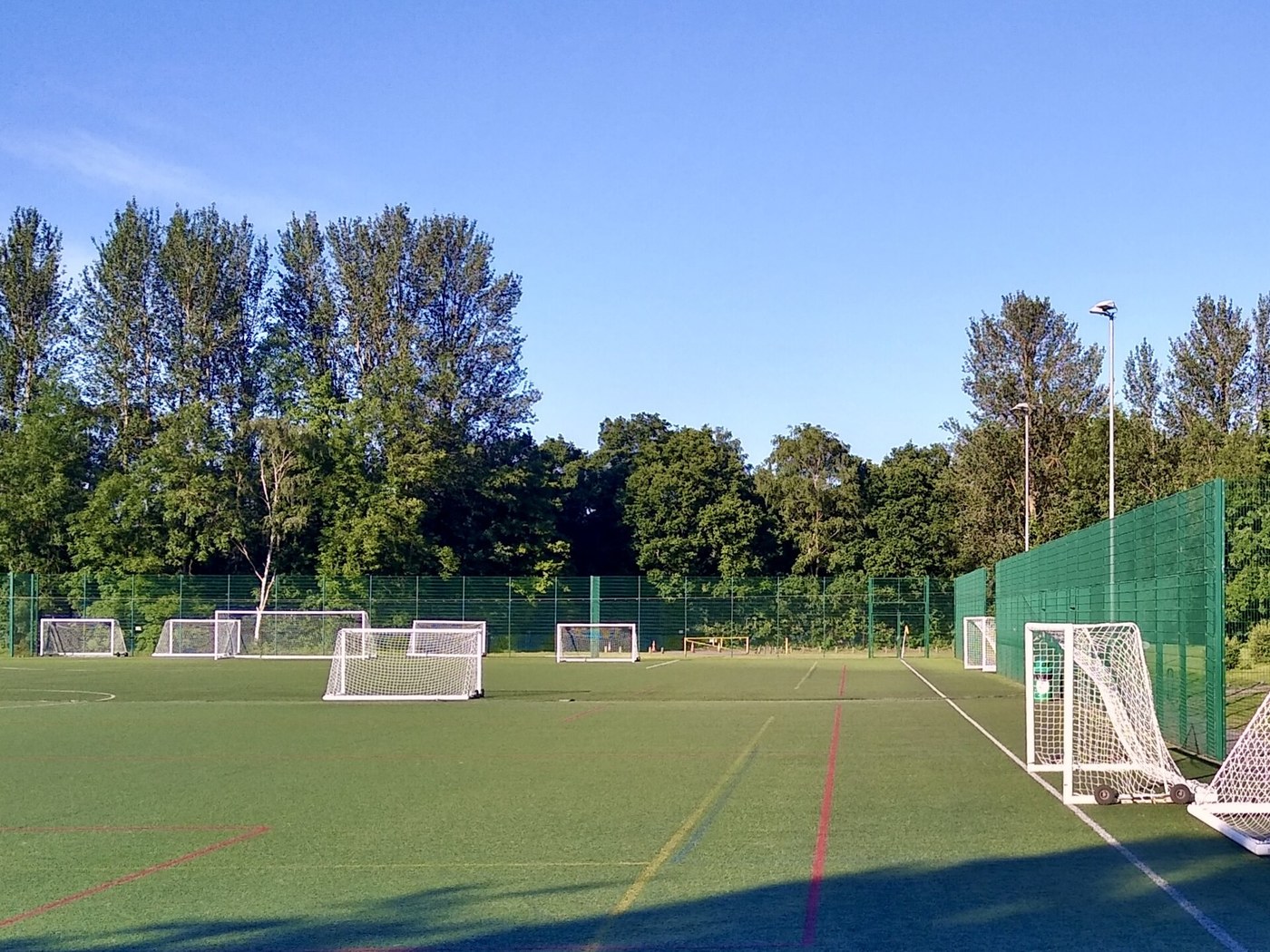
Lux levels for football in BS EN 12193
BS EN 12193:2018 sets lighting classes by level of play:
| Class | Typical use | Outdoor football, horizontal average |
|---|---|---|
| Class III | Training, school and recreational play | 75 lux |
| Class II | Medium-level competition | 200 lux |
| Class I | High-level competition | 500 lux |
What The FA asks for on 3G pitches
The FA's guide to 3G football turf pitch design asks for:
- at least 120 lux maintained average for training and cross play;
- uniformity (minimum to average) above 0.6 for cross play;
- over 200 lux for full-size matches;
- the ability to switch sections of the pitch separately.
Check the current FA and league requirements for your pitch before design, as funded projects and league grounds can carry extra conditions.
Planning a floodlighting project in six steps
- Agree the use and the class. Training only, small-sided leagues or full-size matches. This sets the target lux and uniformity.
- Survey the site. Existing columns, mounting heights, supply capacity and the position of neighbouring homes and roads.
- Produce a lighting design. A lux plot shows average, minimum and uniformity across the playing area, and the spill light beyond it.
- Check planning. New columns or floodlights usually need planning permission from your local planning authority, which will look at light spill, glare and hours of use. Speak to the authority early.
- Install and commission. Aim the floodlights, measure the result and set switching per pitch or section.
- Maintain. Plan inspections and call-outs so pitches stay playable.
Choosing the floodlight
For typical small-sided pitches, an anti-glare floodlight with a wide asymmetric pitch optic works well. PS-POWER is 150 to 400 W at 170 lm/W, IP66, with a 120° x 45° pitch optic, a visor and a mesh guard against ball strikes. Power can be set on site to 100, 80, 60 or 40%, so one fitting can be tuned to the lux each pitch needs. For larger pitches we use PS-POWER 400 or PS-FIELD. Every Polaris product carries a 5-year warranty.
Upgrading an existing centre
Many multi-pitch centres keep their columns and replace the floodlights. We survey the columns first, then design the LED floodlights around them where possible. See 5-a-side football lighting and sports lighting, or request a free lighting survey and lighting design plan.
Sources
- BS EN 12193:2018 Light and lighting. Sports lighting (BSI).
- The FA: Guide to 3G Football Turf Pitch Design Principles and Layouts.
- The FA: Guide to Floodlighting.
Frequently asked questions
How many lux does a 3G pitch need?
The FA asks for at least 120 lux maintained average for training and cross play on a 3G pitch, with uniformity above 0.6, and over 200 lux for full-size matches.
What are the BS EN 12193 classes for football?
Class III 75 lux for training and recreational play, Class II 200 lux for medium-level competition and Class I 500 lux for high-level competition.
Do pitch floodlights need planning permission?
New columns or floodlights usually need planning permission from the local planning authority, which will consider light spill, glare and hours of use.
Can we keep our existing columns?
Often, yes. We survey the columns and mounting heights first and design around them where possible.
What warranty do Polaris floodlights have?
All Polaris products carry a 5-year warranty.